Lula Wins Brazil Election as Flávio Bolsonaro Vows Legal Challenge
Brazilian President Luiz Inácio Lula da Silva has secured a narrow re-election victory over conservative rival Flávio Bolsonaro, extending his political comeback and dealing a setback to the country’s right-wing movement. However, Bolsonaro has rejected the outcome and vowed to seek annulment of the vote, raising fresh concerns over political tensions in Latin America’s largest democracy.
0 likes
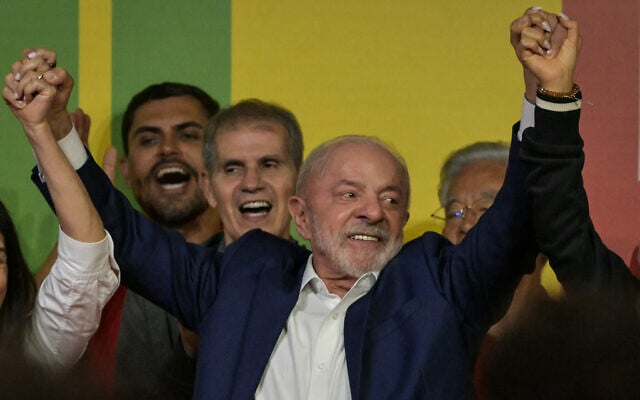
BRASÍLIA, Brazil — Brazilian President Luiz Inácio Lula da Silva has claimed a dramatic victory in the presidential election, defeating conservative challenger Flávio Bolsonaro in a closely contested race that exposed deep political divisions across the country.
According to the official results provided in the election report, Lula secured 51.8 per cent of the vote against Bolsonaro’s 48.2 per cent, winning by approximately 4.4 million votes.
The result marks another major political comeback for Lula, who has remained a central figure in Brazilian politics for more than two decades. His victory also represents a significant setback for the conservative movement associated with former president Jair Bolsonaro.
However, the election outcome was immediately thrown into controversy after Flávio Bolsonaro refused to accept defeat and announced plans to challenge the results in court.
“It is impossible to recognize the results. I am going to request the annulment of these elections,” Bolsonaro said in a brief address in Brasília.
His statement raises the prospect of a prolonged political dispute following an election that has already highlighted the widening ideological divide within Brazilian society.
Lula Secures Historic Political Comeback
Lula’s reported victory marks another remarkable chapter in his political career, which has been characterised by dramatic rises, setbacks and a return to power.
A former metalworker and trade union leader who rose from poverty, Lula first became president in 2003 and won re-election in 2006. He returned to the presidency following his victory in the 2022 election after corruption convictions against him were annulled on procedural grounds.
The latest result further strengthens his position as one of Latin America’s most influential left-wing political leaders.
During his campaign, Lula emphasised social welfare, economic inclusion, national sovereignty and the protection of democratic institutions. His supporters credited grassroots mobilisation, public rallies and a renewed social media strategy with helping him secure victory.
Speaking after the results were announced, Lula said voters had recognised the importance of participating in the democratic process.
“People went to vote because we managed to convince them that voting was very important for ensuring democracy in the country,” he said.
Celebrations erupted in major cities, including Rio de Janeiro and São Paulo, where thousands of supporters wearing the red colours associated with Lula’s Workers’ Party took to the streets.
Flávio Bolsonaro Rejects Election Outcome
Flávio Bolsonaro, a senator and the son of former far-right president Jair Bolsonaro, rejected the result and vowed to pursue legal action seeking to annul the election.
The dispute follows confusion surrounding voting hours after a Supreme Court ruling extended voting by two hours in some circumstances.
According to the supplied report, the extension followed concerns raised by Lula over the alleged withdrawal of buses from circulation in several cities, which he said prevented some voters from reaching polling stations.
Flávio Bolsonaro also requested an extension in certain regions because of heavy rainfall but subsequently criticised the decision, describing it as an “unacceptable” move and a “dirty trick”.
The competing claims added to tensions surrounding the election, although Bolsonaro’s allegations do not, by themselves, establish that the results were invalid.
Any formal challenge will need to be assessed through the relevant legal and electoral procedures.
Voter Mobilisation Proves Decisive
Lula’s victory followed an intensive campaign to regain support after his performance in the first round fell short of securing the presidency outright.
His Workers’ Party responded with large rallies, a stronger digital campaign and the message “Never Again Bolsonaro”, seeking to mobilise voters concerned about the future of Brazil’s democracy.
The abstention rate reportedly fell from 21 per cent in the first round to 19 per cent in the runoff, indicating increased participation in the decisive vote.
Supporters described the outcome as a victory for democratic participation and collective mobilisation.
Julio Canelo, a 42-year-old lawyer celebrating in Rio de Janeiro, said the result reflected the efforts of voters both on the streets and online.
The campaign also featured a fierce social media battle. Lula’s team accused Meta, the parent company of Facebook, Instagram and WhatsApp, of algorithmic manipulation that allegedly favoured his opponent.
Meta denied the allegations but acknowledged that some advertisements associated with Lula’s campaign had been mistakenly deactivated because of technical errors.
Following his reported victory, Lula renewed calls for greater regulation of social media companies, arguing that digital platforms play an increasingly influential role in elections and public debate.
Brazil’s Political Divide Remains Deep
Despite Lula’s victory, the close result illustrates the significant challenges facing his administration.
Nearly half of the electorate supported Bolsonaro, reflecting persistent dissatisfaction among voters concerned about living costs, crime and the direction of the economy.
Lula’s third presidential term was associated with falling inflation and unemployment, alongside efforts to reduce hunger and expand social support programmes. Nevertheless, economic pressures continued to weigh on many households.
During the campaign, Bolsonaro sought to position himself as a more moderate alternative to his father, attracting conservative voters and some citizens seeking political change.
The election campaign was marked by personal attacks, scandals and competing narratives about Brazil’s economic and democratic future.
Lula will therefore face the difficult task of governing a country where political divisions remain entrenched and a substantial section of the electorate opposed his return to office.
Foreign Policy and US Relations in Focus
Lula’s campaign placed considerable emphasis on Brazilian sovereignty and the country’s ability to determine its own economic and diplomatic priorities amid pressure from the United States under President Donald Trump.
In his remarks following the election, Lula reiterated his opposition to Brazil being treated as subordinate to foreign interests.
“This country will not accept being anyone’s backyard,” he said.
The result could have implications for regional politics, particularly as several Latin American countries have experienced growing support for conservative and right-wing political movements.
Lula received congratulations from leaders across the region, including Mexico’s left-wing President Claudia Sheinbaum, who celebrated the outcome as a victory for democracy.
Other regional leaders, including Chilean President José Antonio Kast and Ecuadorian President Daniel Noboa, also extended congratulations, despite their differing political orientations.
The reactions demonstrate the importance of Brazil’s leadership to diplomatic relations and political cooperation across Latin America.
Challenges Await Lula’s New Term
Lula’s next term is expected to be shaped by economic pressures, crime, social inequality and the challenge of rebuilding political consensus.
His administration will also need to navigate a Congress described in the supplied report as dominated by right-wing lawmakers, potentially complicating efforts to advance legislation and implement his policy agenda.
At an advanced age, Lula will face scrutiny over his capacity to sustain an ambitious governing programme through the end of the new presidential term in 2030.
Meanwhile, the prospect of a legal challenge by Bolsonaro could prolong uncertainty and test the resilience of Brazil’s electoral institutions.
A Defining Moment for Brazilian Democracy
The election represents a significant moment in Brazil’s political history, underscoring both the resilience of Lula’s political movement and the enduring strength of the conservative opposition.
While the reported result gives Lula another mandate to govern, the narrow margin means his administration will face substantial pressure to deliver economic improvements, address public concerns and rebuild trust across political divisions.
Share this story
Choose a platform or copy the link